
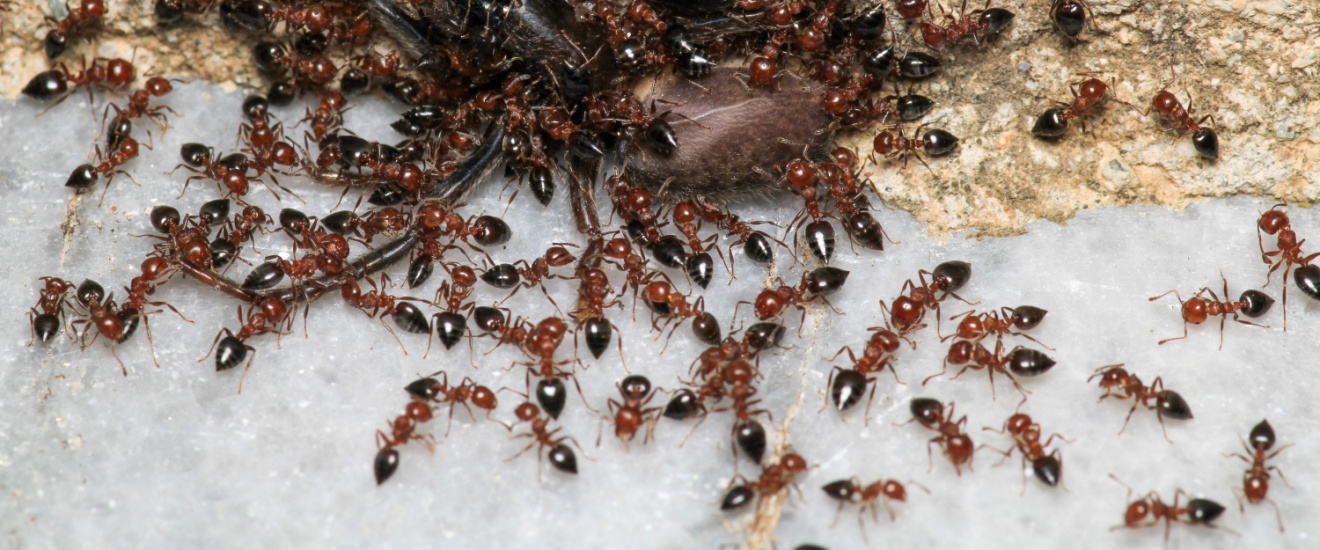
If ants have suddenly appeared in your Bethesda home—trailing along the kitchen counter, circling the bathroom sink, appearing in a room that has never had ant activity before—the timing is not random. A colony near your home has responded to a specific trigger, and your house is where the foragers found what they were looking for. Understanding what that trigger was helps explain why the activity started and what it takes to stop it with professional ant control.
The Seasonal Trigger
If you are reading this in spring or early summer, the most likely explanation is the annual expansion cycle. As soil temperatures in Montgomery County rise above 50 degrees—typically in late March through April—ant colonies that slowed during winter shift into growth mode. Worker production increases. Foraging range extends. Scouts explore farther from the nest, and your foundation is in their path.
Carpenter ant swarmers—large, winged reproductives—emerge on warm spring days in April and May. Finding winged carpenter ants inside your Bethesda home means a colony has been present long enough to reach reproductive maturity—typically several years. This is not a minor issue and warrants immediate professional inspection.
If you are reading this in summer, the activity is driven by peak colony size and heat. Colonies are at their largest. Foraging is most aggressive. And when temperatures climb into the 90s with high humidity, ants seek the cooler, moister interior of your air-conditioned home—particularly kitchen sinks, bathroom faucets, and any accessible water source.
The Weather Trigger
Sudden ant surges in Bethesda frequently follow rain events. Heavy rain saturates the soil around foundations and floods shallow ant tunnel networks. Colonies evacuate to higher, drier ground—and when the nest is adjacent to your foundation, the nearest dry shelter is inside your home. The overnight ant trail that appeared after yesterday’s thunderstorm is one of the most common pest encounters in Montgomery County.
The opposite weather extreme triggers activity too. Extended dry periods between summer storms reduce outdoor moisture availability. Ants that were finding adequate water in the soil begin seeking it inside homes instead. Trails that lead to the kitchen sink or the bathroom faucet rather than to food indicate moisture-seeking behavior—the ants are after water, not crumbs.
The Property Trigger
If the weather has been stable and ant activity still surged, something on or near your property may have changed:
- New mulch applied against the foundation creates moist nesting habitat inches from entry points
- Landscaping work that disturbed soil near the house may have displaced colonies toward the structure
- A neighbor’s pest treatment may have pushed ant populations from their property toward yours
- Irrigation changes that increased moisture near the foundation shifted the nesting conditions closer to your home
Why It Keeps Happening
If this is not the first time ants have appeared in your Bethesda home—if it happens every spring, every summer, or every time it rains—the colony near your foundation is established and the entry points are open. The pattern will repeat every time conditions trigger foraging unless the colony is eliminated and the barrier is maintained.
Consumer repellent sprays make the pattern worse. When ants encounter repellent residue, they do not walk through it and die. They reroute to a different entry point. With multi-queen species like odorous house ants, repellent exposure can cause the colony to fragment and establish new nesting sites—producing ant activity from multiple new locations.
Professional ant control uses non-repellent products that foragers carry back to the colony. The product spreads through the population over one to three weeks and reaches the queens. The colony collapses from within. A maintained exterior barrier then prevents new colonies from the surrounding landscape from reestablishing.
What You Can Do Right Now
- Wipe the trail with soapy water to break the pheromone signal
- Identify and eliminate the food or water source the ants are targeting
- Do not spray the trail with a consumer repellent product
- Fix dripping faucets and eliminate standing moisture
- Check for and seal the entry point if you can identify it
These steps address the immediate symptom. Colony-level treatment addresses the source.
If ants have taken over your Bethesda home, contact Pestechs for a free estimate and find out what is driving the activity.