
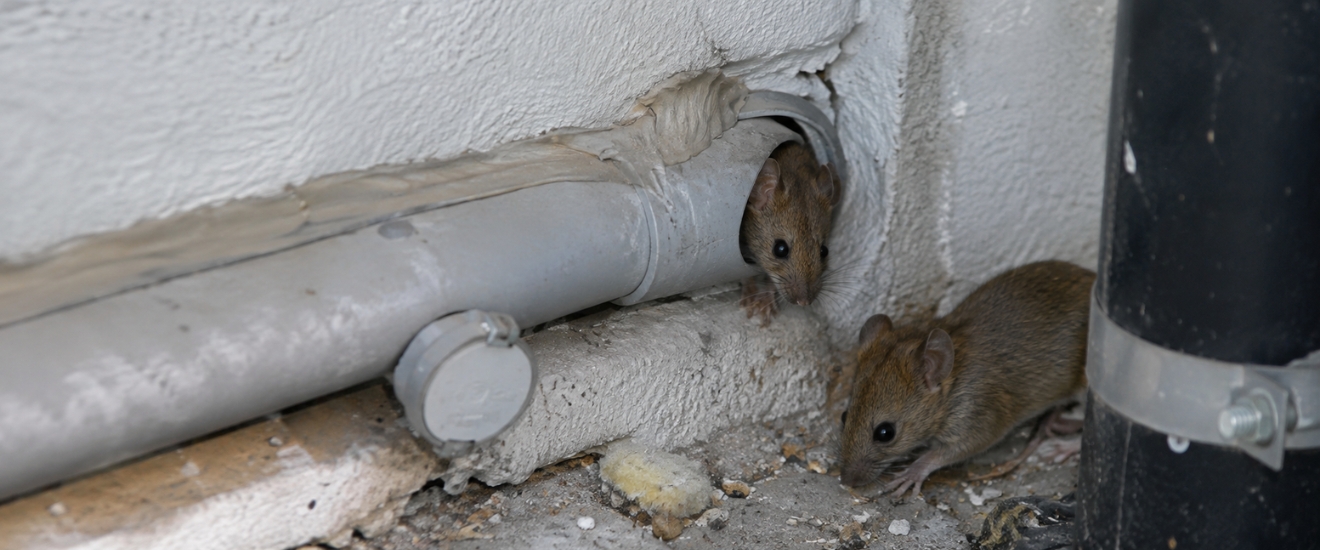
Mice usually enter homes through gaps that blend into the structure: a space beside a pipe, a worn garage seal, an uncovered vent, or a narrow opening where two building materials meet. The entry route may be several rooms away from the place where you find droppings. A professional mouse and rodent inspection connects interior evidence with exterior access points so removal and exclusion can address the same problem.
Utility Openings Around Pipes and Cables
Plumbing, electrical lines, air-conditioning components, internet cables, and other utilities must pass through exterior walls or the foundation. The space surrounding these penetrations may widen as sealant ages or equipment is replaced. Mice can use the remaining edge and enter a wall void directly.
Inspect utility penetrations from outside whenever they are safely accessible. Look around hose bibs, refrigerant lines, meter boxes, conduit, and cable entry points. Indoors, signs near a sink cabinet, laundry connection, mechanical room, or utility closet may help trace the route back toward one of these openings.
Gaps Under Exterior and Garage Doors
A closed door can still leave space at the threshold. Worn sweeps, damaged weatherstripping, uneven pavement, and corners where seals meet can create an entry path. Daylight visible beneath or beside a door deserves attention, but some mouse-sized openings are harder to see from a normal standing position.
Garage doors are frequent trouble spots because their wide seals cross surfaces that may slope, crack, or settle. Mice may also run inside while the door is open, then hide among storage. Once in the garage, they can move deeper into the home through gaps around shared walls, doors, pipes, or wiring.
Vents and Openings Designed for Airflow
Dryer vents, exhaust vents, attic vents, foundation vents, and other airflow openings need proper protection that preserves their intended function. Missing covers, damaged screens, or loose edges can admit rodents. Any repair should remain compatible with the equipment and building system. Blocking an active vent with an improvised material can create a separate safety or moisture problem.
Rooflines, Soffits, and Upper-Level Gaps
An inspection limited to the foundation can miss mouse access above eye level. Roof returns, soffits, fascia boards, siding corners, dormers, and intersections between additions may develop gaps. Nearby branches, fences, downspouts, and textured exterior surfaces can help rodents reach upper portions of a building.
Attic activity makes these areas especially relevant. Scratching overhead, disturbed insulation, droppings near attic edges, or gnawing around stored items can point toward an upper entry route. Safe inspection practices are essential around ladders, steep roofs, wiring, and contaminated materials.
Common Entry Points to Check
During a careful exterior review, pay attention to:
- openings around plumbing, wiring, cable, and HVAC lines
- worn seals at garage doors and exterior doors
- damaged or poorly fitted vent covers
- gaps at siding corners, soffits, fascia, and roof intersections
- cracks or openings where foundations meet framing
- spaces beneath porches, decks, steps, and additions
- damaged screens and rarely used doors or windows
The list provides a starting point, but an entry point becomes more meaningful when it aligns with evidence inside. A gap near the front porch may be unrelated to droppings concentrated beside a rear utility room. Mapping both sides of the structure helps prioritize the openings that rodents are most likely using.
Construction Changes Can Create New Routes
Homes throughout Maryland, DC, and Northern Virginia range from historic row houses to recently built subdivisions. Age can produce deterioration, while newer construction can develop openings where multiple trades installed utilities or exterior components. Renovations, additions, replacement windows, new heat-pump lines, and cable installations may also change the building envelope.
Shared-wall housing requires a wider view. A mouse can enter another section of the building and travel through connected voids before emerging in your unit. Property managers, associations, owners, and occupants may need to coordinate when signs extend across several units or common areas.
Why the Inside Sighting Can Be Misleading
Mice tend to travel along walls, behind appliances, beneath cabinets, and through other protected edges. The place where one appears is often a feeding area or an opening from a wall void. It may be far from the exterior breach.
Keep track of where and when you notice droppings, sounds, gnawed materials, or sightings. This simple map can help an inspector understand movement. Leave droppings and contaminated material undisturbed until you have guidance for safe cleanup, especially when activity is extensive.
Finding and closing access points is a detailed process, particularly in older, attached, or heavily renovated buildings. If mouse activity continues or you need help tracing the route, request an inspection from Pestechs for a property-specific removal and exclusion plan.