
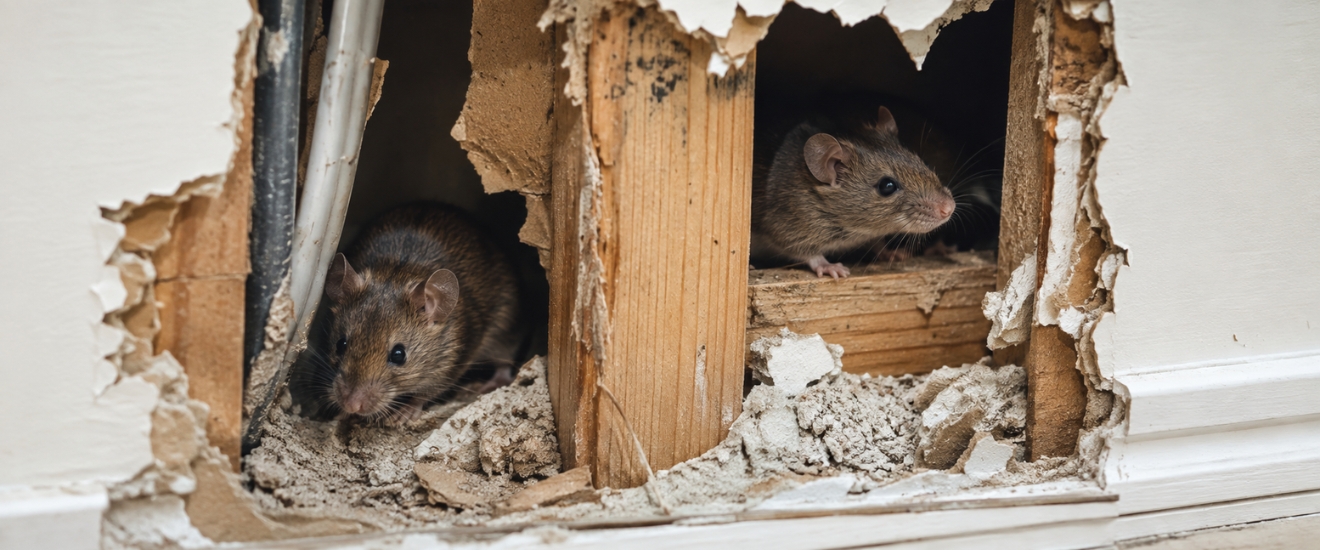
Scratching or light movement inside a wall often indicates a mouse traveling between an entry point, nesting area, and food source. The room where you hear the sound may reveal only one section of a much longer route. For a Rockville home, a useful investigation combines interior evidence with an exterior inspection of doors, utilities, vents, rooflines, and attached spaces. Pestechs provides rodent control for mice in walls and can evaluate the structure when sounds or other signs keep returning.
Start With the Timing and Location of the Noise
Write down the room, wall, time, and duration each time you hear activity. Mice are usually most active after dark, and repeated sounds near the same wall can help narrow the search. Note whether the noise comes from low near the floor, around a plumbing area, or higher toward the ceiling.
Sound travels through framing, pipes, ductwork, and open voids, so the loudest point may sit several feet from the animal. Compare observations from adjoining rooms and from the floor above or below. In a townhouse, condominium, or other attached building, connected structural spaces may extend beyond your unit.
The character of the noise can provide context, although sound alone rarely confirms the species. Light scratching, rustling, or quick movement may fit mice. Heavier movement could point toward rats, squirrels, or another animal. Daytime sounds, repeated activity at a roof edge, or large thumps may shift the investigation toward a different pest or building area.
Look for Evidence Near Likely Exit Points
Mice often leave wall voids through openings beneath cabinets, around pipes, behind appliances, or near baseboards. Check accessible areas with a flashlight. Droppings, gnawed food packages, shredded material, or smudges along a protected edge can reveal where they emerge.
Kitchen sink cabinets deserve attention because plumbing openings often connect directly to hidden spaces. Laundry rooms, utility closets, mechanical areas, and bathroom vanities may have similar penetrations. In a finished basement, openings around pipes and wiring can connect the lower level with wall cavities above.
Avoid opening walls based on noise alone. Cutting drywall in the wrong location adds damage and may still miss the travel route. An inspection can often gather enough information from existing access points, exterior conditions, and patterns of evidence to plan the next step.
Trace the Route Toward the Exterior
Once you identify an interior activity area, inspect the corresponding part of the building outside. A mouse near a basement utility wall may be using a foundation penetration. Activity beside an attached garage may lead to a worn door seal or gap in the shared wall. Sounds near an upstairs ceiling can connect to soffits, roof intersections, or attic access.
Rockville includes homes of many ages and designs, from older neighborhoods to newer townhome developments. Each construction style creates its own transitions and weak points. Additions, enclosed porches, replacement siding, utility upgrades, and remodeling can leave openings where old and new materials meet.
Landscaping may also help explain the route. Dense vegetation against the home gives mice cover while they investigate the foundation. Stored firewood, stacked materials, bird seed, and outdoor clutter can support activity nearby. These conditions help prioritize the inspection, while physical evidence at the structure confirms the entry point.
Use Traps as Monitoring Tools
Trap results can add information about rodent movement. Placement should follow protected travel edges instead of the center of a room. The location of repeated catches can point toward an emerging route, while untouched traps may indicate poor placement, competing food, or activity elsewhere.
Use traps according to their instructions and keep them inaccessible to children and pets. Poison used indoors can create additional concerns if a rodent dies in an inaccessible wall void. A professional can select methods based on the structure, the people and animals in the home, and the suspected rodent.
Continue tracking evidence after a capture. One mouse may be part of a larger pattern, and open entry points can admit new animals. Fresh droppings, renewed sounds, and food damage provide stronger evidence than the number of quiet nights alone.
Pair Removal With Exclusion
The investigation should eventually answer two different questions: where are the mice traveling inside, and how are they crossing the exterior of the home? Trapping addresses active mice. Exclusion closes the route they used. Storage and sanitation changes reduce food and nesting options along that route.
An inspector may recommend sealing confirmed gaps in stages while monitoring interior activity. Timing helps prevent rodents from becoming trapped in inaccessible areas. The plan may also include a return visit to check devices, review new evidence, and confirm that the sounds have stopped.
Persistent wall noises deserve a methodical response, especially when droppings, gnaw marks, or odors appear nearby. Pestechs is a local provider of pest control in Rockville and can inspect both the interior evidence and the building exterior. Schedule a rodent inspection to find the likely source and build a plan for removal and exclusion.