
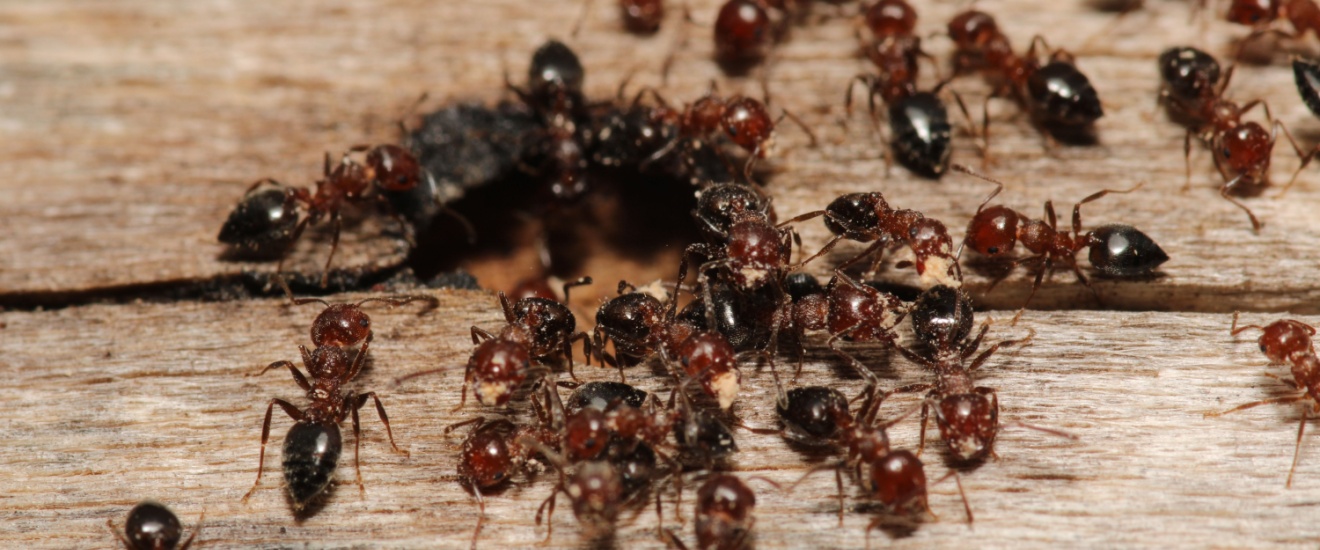
Ants are the most persistent insect issue Rockville homeowners face—trailing through kitchens, appearing in bathrooms, and reforming along baseboards within hours of being wiped away. The frustration is understandable, but the persistence makes sense once you understand what is actually driving the activity. The trail on your counter is a symptom of a much larger colony living outside your home, and addressing the symptom without addressing the colony is why the problem keeps returning. Here is what Rockville homeowners need to know about ant problems in this area and what it takes to resolve them.
Which Ants Are in Your Rockville Home
The species determines the strategy, so identification is the first step.
Odorous house ants are the most common indoor-trailing ant in the DMV. They are small, dark, and produce a distinctive unpleasant odor when crushed. They nest in moist soil near foundations, under walkways, and inside wall voids where moisture has accumulated. Their colonies can contain tens of thousands of workers with multiple queens, and they are active across a long season in Montgomery County—from early spring through late fall, with indoor activity possible during mild winter periods.
Pavement ants are small, dark ants that nest under driveways, sidewalks, patios, and concrete slabs. They push small soil mounds through cracks in hardscaping and forage in kitchens along baseboards and near food sources. In Rockville, where most homes have substantial concrete driveways, walkways, and patios, pavement ant nesting habitat is abundant.
Carpenter ants are significantly larger than other common species—typically a quarter inch to half an inch long, dark brown, or black. They excavate galleries inside moisture-damaged wood to build their nests. In Rockville, where homes endure rain, humidity, freeze-thaw cycles, and the occasional ice storm, the amount of moisture-compromised wood around a typical property is substantial: aging decks, fence posts, window trim, fascia, door frames, and structural wood near plumbing leaks.
If you are finding small piles of sawdust-like shavings (frass) near wood trim or structural members, carpenter ant activity should be investigated promptly. Carpenter ants cause progressive structural damage that accumulates over time.
Fire ants are present in parts of the DMV. Their mounds appear in yards, and their stings are painful and can cause serious allergic reactions—particularly in children and pets.
What Drives Ant Activity in Rockville
- Moisture: This is the primary driver for most ant species in the DMV. Rockville’s humid climate keeps the soil near foundations moist for much of the year, providing ideal nesting conditions. Inside the home, kitchen sinks, bathroom faucets, dishwasher connections, condensation on pipes, and pet water bowls all attract foraging ants seeking water—often more than food.
- The seasonal cycle: Ant activity in Rockville increases rapidly in March and April as soil warms and colonies enter their growth phase. It peaks during the hottest, most humid summer months. It may spike briefly in early fall as colonies prepare for winter. And it resumes the following spring from colonies that survived winter in the soil and inside heated wall voids.
- Property conditions: Mulch beds against the foundation, dense landscaping, cracks in concrete that provide subsurface access, irrigation that saturates the soil near the house, and poor drainage that keeps the foundation zone wet—all of these create ant nesting habitat within inches of your entry points.
Why Consumer Sprays Fail
Consumer repellent sprays kill the ants they contact and leave a chemical residue that repels surviving ants. The colony is not reduced. The foragers reroute to a different entry point. With multi-queen species like odorous house ants, repellent exposure can trigger colony fragmentation – the colony splits and establishes new nesting sites, producing ant activity from multiple new locations.
Professional ant control uses non-repellent products that foragers carry back to the colony. The product spreads through the population via contact and food sharing, reaching the queens over one to three weeks. The colony collapses from within. This colony-elimination approach is not available in consumer form.
What Homeowners Should Do
- Fix dripping faucets and eliminate standing moisture inside the home
- Pull mulch back at least 12 inches from the foundation
- Seal cracks in the foundation, around window frames, and at utility penetrations
- Trim vegetation so it does not contact the home exterior
- Address drainage issues so water flows away from the foundation
- Do not spray ant trails with repellent products—this makes the problem worse
These steps reduce the conditions attracting ants. Professional treatment eliminates the colonies and maintains the barrier that prevents recolonization.
Pestechs provides comprehensive ant control as part of both Silver and Gold plans, including carpenter ant treatment. Free estimates available for every Rockville property.
If ants have become a recurring problem in your Rockville home, contact Pestechs for a free estimate.