

Request a Free
Estimate Today!
"*" indicates required fields

Ant Facts Homeowners in MD, VA & Washington, DC
Should Know
Ants are one of the most common “everyday” pests in the DMV—but that doesn’t mean they’re simple. While there are thousands of ant species worldwide, only a small number regularly invade homes and businesses. Most ants are opportunistic feeders: they’ll sample nearly anything they can carry back to the nest, but many species show a strong preference for sugary foods (think: syrup drips, fruit, soda residue, and pet bowls).
Ants vary widely by species, which is why a one-size-fits-all approach rarely works. Some colonies turn over quickly, while others can persist for a long time and keep producing new workers if the queen is protected. And size isn’t a great clue—ants can be tiny enough to slip through hairline gaps, or large enough to be easily visible as they trail across counters and baseboards.
Ant Anatomy: How to Spot What You’re
Dealing With
Ants are closely related to bees and wasps, and they share some key characteristics that make them easy to identify up close:
- Three distinct body sections (head, midsection, and abdomen)
- Elbowed antennae
- Noticeable mandibles (jaws) used for carrying food and building nests
Winged Ants vs. Termites (A Common DMV
Mix-Up)
In warm weather—often during spring and early summer in the DC Metro—you may see swarms of winged insects near windows, decks, or foundation lines. Winged ants are frequently mistaken for termites because both can “fly” during mating season and often drop their wings afterward.
A quick way to tell them apart:
- Ants: clearly pinched, narrow “waist” between the midsection and abdomen
- Termites: thicker, more uniform body shape with no pinched waist
If you’re seeing winged insects indoors, it’s worth getting a professional ID—because the treatment plan for ants vs. termites is very different.
Pests We Eliminate From Your Home
Protecting Your Home And Family Is
Our #1 Priority
Try Pestechs Today - We Guarantee 100% Satisfaction
Pestechs Ant Control for MD, VA & Washington, DC
When ants show up inside, it’s usually a sign the colony has already established a reliable path to food or water—and the ants you see are only the “foragers,” not the nest itself. That’s why Pestechs focuses on eliminating the source and breaking the trail system, not just spraying what’s visible.
Step 1: Identify the Species and the “Why Here”
Different ants behave differently in the DMV. Some are pulled indoors by sweets, some by grease, and many by moisture (bathrooms, kitchens, basements, laundry rooms, and plumbing lines). Our first priority is to determine what’s driving activity and where they’re traveling—inside and out.
Step 2: Target the Colony, Not Just the Ants
Quick knockdown sprays can reduce what you see today, but they often don’t solve the colony—and in some cases can make certain ants scatter and create new satellite nests. We use a targeted strategy that may include professional baiting, non-repellent products, and precision applications to active routes and harborage areas so the problem gets handled at the source.
Step 3: Strengthen the Exterior Perimeter
Most recurring ant problems in the DMV start outside: foundation edges, mulch beds, walkways, patios, and moisture pockets around the structure. We reinforce your home or building with an exterior barrier approach designed to reduce new invasions and keep seasonal surges from turning into indoor trails.
Step 4: Reduce the Conditions That Keep Ants Coming Back
Long-term results come from removing what ants need to thrive. We’ll point out practical fixes—like moisture reduction, sealing common entry gaps, trimming vegetation contact, and addressing food attractants—so your structure is less inviting after treatment.
What Makes Us the #1 Choice
for Pest Control?
Family-Friendly Service
EPA-approved products and trained technicians to protect people, pets, and the environment.
Locally Owned Business
A family-owned company focused on trust, reliability, and personal service.
Guaranteed Protection
If pests come back between visits,
so do we.
What Your Neighbors Are Saying About
Pestechs Pest Control Services
The Cities We Serve in Maryland,
Virginia & Washington DC
Washington, D.C.
Maryland
Northern Virginia
Ant Control FAQs for the DMV
(Washington, DC, Maryland & Northern Virginia)
How do I know if I have an ant problem or just “scouts”?
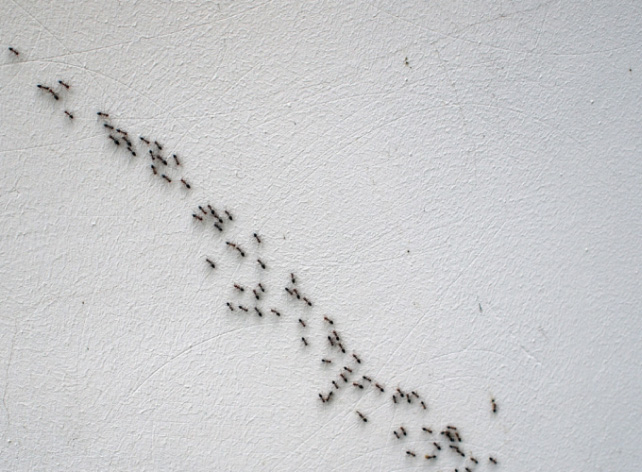
If you’re seeing ants repeatedly in the same rooms, noticing trails along baseboards or counters, or finding ants near pet bowls, trash, or sinks, it’s usually more than a few scouts. In the DMV, ants often establish consistent routes between outdoor nests and indoor food/moisture sources—especially during spring warm-ups and summer humidity.
What causes ants to come inside homes in Maryland, Northern Virginia, and Washington, DC?
In the DMV, the biggest triggers are humidity, heat, and easy access to food and water. Common attractants include:
- Sugary residues (juice, soda, fruit, honey, syrup)
- Grease and crumbs in kitchens
- Pet food and water bowls
- Moisture around sinks, tubs, basements, and laundry rooms
Seasonal changes also matter—heavy rains, drought, and sudden warm spells can push ants indoors.
What’s the fastest way to get rid of ants in the house?
Fast relief usually comes from a targeted treatment plan that stops active trails and begins addressing the colony. But “fast” doesn’t always mean “finished.” Many ant problems require a professional approach that includes proper identification, targeted baiting or non-repellent products, and exterior perimeter protection to prevent repeats.
Why do ants keep coming back even after I spray them?
Sprays often kill the ants you see—but not the colony. In some cases, using the wrong product can cause certain ants to scatter and form new satellite nests, making the issue worse. Long-term control depends on eliminating the nest source, breaking the trail system, and reducing conditions that attract ants.
Are winged ants in my home a sign of termites?
Not always. In the DMV, winged ants often swarm during warm, humid periods and are commonly mistaken for termites. A quick rule:
- Ants have a narrow “waist” and elbowed antennae
- Termites have a thicker body with no pinched waist
If you’re seeing winged insects indoors, Pestechs can identify what you’re dealing with and recommend the right next step.
What types of ants are most common in the DMV area?
Across Washington, DC, Maryland, and Northern Virginia, common problem ants include odorous house ants, pavement ants, carpenter ants, and other small indoor-invading species. The best treatment depends on the species, where they’re nesting, and what’s attracting them.
Do carpenter ants mean my home has structural damage?
Carpenter ants don’t eat wood like termites, but they often nest in damp, softened, or water-damaged wood. If carpenter ants are present, it’s smart to inspect for moisture issues such as roof leaks, window/door rot, or damp crawl spaces. Treating the ants is important—but so is correcting moisture conditions to prevent recurrence.
Where do ants typically nest around DMV homes?
In this region, ant nests are commonly found:
- Under sidewalks, driveways, patios, and pavers
- In mulch beds and landscape edges
- Along foundations and under stones or debris
- In wall voids near plumbing lines (some species)
- In damp wood around windows, decks, or porches (carpenter ants)
That’s why effective ant control usually includes both interior trail treatment and exterior perimeter work.
Is ant bait better than spraying?
Often, yes—when it’s the right bait for the right species. Professional baiting can help ants carry the active ingredient back to the colony. Sprays can be useful in specific situations, but an over-the-counter “spray everything” approach can disrupt trails and lead to colony splitting in some species. Pestechs chooses the method based on species behavior and the infestation pattern.
How long does it take for professional ant treatment to work?
Many customers see noticeable improvement within 24–72 hours, but full resolution can take longer depending on colony size, nesting location, and the species involved. If there are multiple nests outdoors (common in dense DMV neighborhoods), ongoing perimeter protection and follow-up may be recommended.
Do I need to leave my house during ant treatment?
In most cases, no. Standard ant treatments typically allow you to remain at home. Your technician will provide any specific instructions—especially regarding pets, food prep areas, and keeping children away from treated zones until they’re dry.
Are Pestechs ant treatments safe for kids and pets?
Pestechs uses professional-grade products applied according to strict label guidelines and best practices. Your technician will explain what was applied, where it was applied, and any simple precautions to follow so your household stays safe while the treatment does its job.
What can I do to prevent ants from returning?
Prevention is a mix of sanitation, moisture control, and exclusion. Helpful steps include:
- Wipe down counters and remove sugary residues
- Store pantry items in sealed containers
- Rinse recyclables and keep trash sealed
- Fix drips and reduce moisture in basements/crawl spaces
- Seal entry points around doors, windows, and utility penetrations
- Keep mulch and vegetation from touching the structure
Pestechs also focuses on building an exterior protection perimeter, which is one of the best long-term strategies in the DMV.
Do you provide ant control for businesses in Washington, DC and the surrounding area?
Yes. Ant activity is common in restaurants, offices, warehouses, multifamily properties, and retail spaces across the DMV. Pestechs can design a plan that addresses sanitation risk areas, entry points, and exterior pressure—while helping reduce repeat issues and customer complaints.
When is ant season in the DMV?
Ant activity can happen year-round indoors, but most homeowners see spikes during:
- Spring warm-ups (increased foraging and swarmers)
- Summer humidity (high activity and indoor pressure)
- Heavy rains or drought (ants seek stable shelter and moisture)
If you’re seeing ants consistently, it’s best to address it early before colonies expand.