

Request a Free
Estimate Today!
"*" indicates required fields

Understanding Mosquitoes: What Every Homeowner
in the DMV Should Know
Mosquitoes are one of the most common warm-weather pests throughout the DMV (Washington D.C., Maryland, and Northern Virginia). From suburban neighborhoods and wooded communities to urban backyards and parks, mosquitoes can quickly make outdoor spaces uncomfortable during the spring, summer, and early fall months.
While there are dozens of mosquito species found throughout the Mid-Atlantic region, most share similar habits. Female mosquitoes feed on blood to produce eggs, while both males and females feed on plant nectar. What many homeowners don’t realize is that mosquitoes don’t need large bodies of water to reproduce. In fact, even small amounts of standing water in clogged gutters, birdbaths, flower pots, children’s toys, tarps, or low spots in the yard can create ideal breeding conditions.
The DMV’s warm, humid summers and frequent rainfall create the perfect environment for mosquito populations to thrive. Because mosquitoes can breed quickly and travel from neighboring properties, effective mosquito control requires more than simply treating visible insects. Long-term relief comes from reducing breeding sites and targeting mosquitoes where they rest throughout the day.
Mosquito Anatomy: How to Identify Them
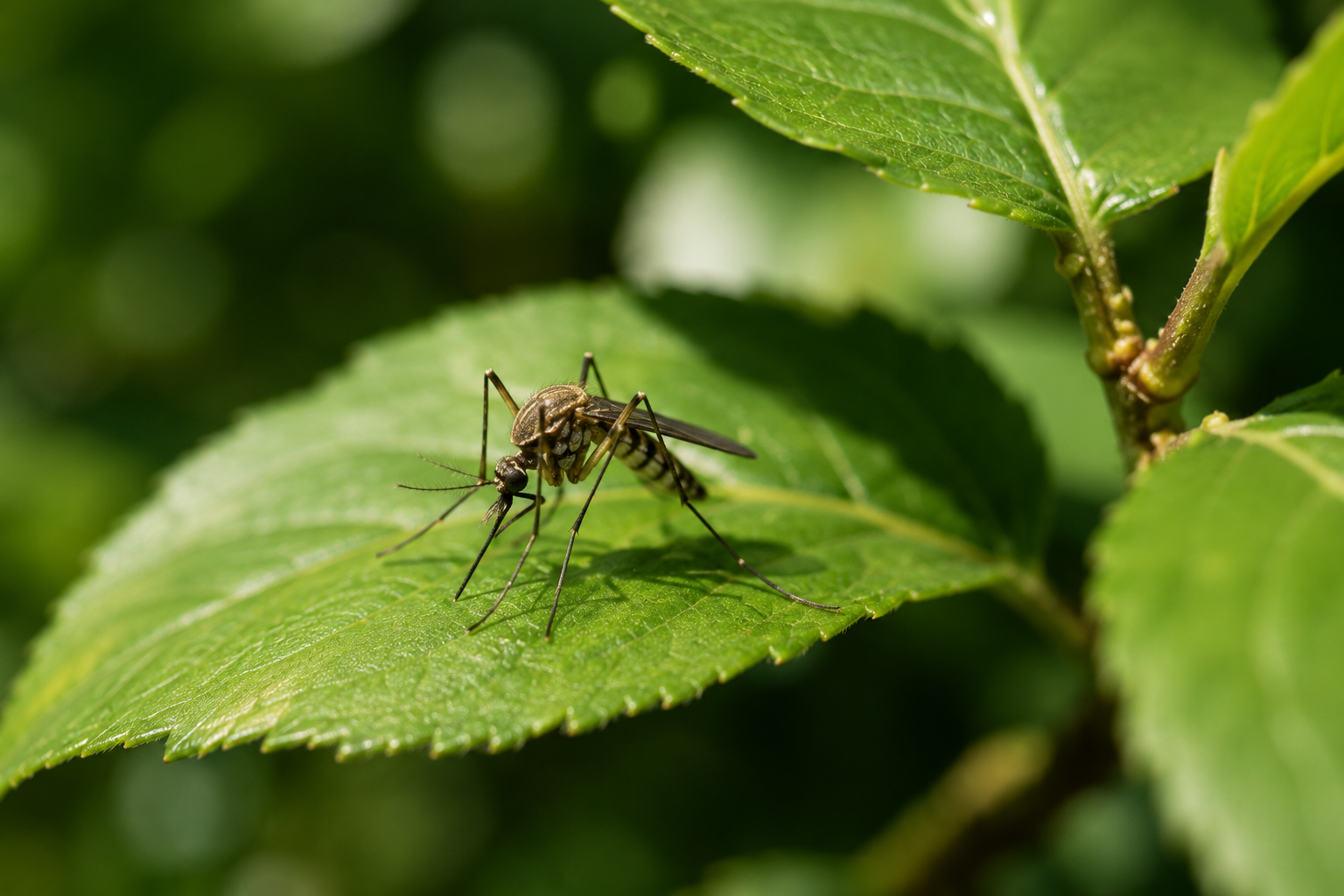
Mosquitoes are small flying insects that are easy to recognize once you know what to look for.
Common characteristics include:
- Long, slender bodies
- Six thin legs
- A single pair of wings
- A long, needle-like mouthpart (proboscis) used for feeding
- A noticeable high-pitched buzzing sound during flight
Most mosquitoes found throughout the DMV are gray to brown in color and measure between 1/8 and 3/8 of an inch long.
Mosquitoes vs. Midges: A Common DMV Misidentification
During the warmer months, homeowners throughout Washington D.C., Maryland, and Northern Virginia often notice swarms of small flying insects around patios, decks, ponds, and outdoor lighting. Mosquitoes are frequently mistaken for harmless midges or gnats because they can look similar from a distance.
A quick way to tell them apart:
- Mosquitoes: Have a long proboscis used for biting and feeding on blood.
- Midges: Do not bite and lack the long needle-like mouthpart.
If you’re spending time outdoors and consistently getting bitten, mosquitoes are likely the culprit. A professional mosquito inspection can help identify breeding areas around your property and determine the best treatment strategy to reduce mosquito activity and help you reclaim your yard throughout the mosquito season.
Pests We Eliminate From Your Home
Protecting Your Home And Family Is
Our #1 Priority
Try Pestechs Today - We Guarantee 100% Satisfaction
Our Mosquito Control Process: How We Help You Reclaim Your Yard in MD, VA & Washington, DC
When mosquitoes become a problem around your home, the insects you’re seeing are only part of the issue. Mosquito populations are constantly reproducing in nearby breeding sites, and without addressing the source, new mosquitoes can continue to emerge throughout the season. That’s why Pestechs focuses on reducing mosquito populations at every stage of their lifecycle—not just treating the adults you see flying around.
Step 1: Identify Breeding Areas and Mosquito Hot Spots
Mosquitoes need standing water to reproduce, and even small amounts can support a growing population. During our inspection, we look for common breeding areas around your property, including clogged gutters, birdbaths, drainage areas, planters, children’s toys, tarps, and other locations where water can collect. We also identify shaded, humid areas where adult mosquitoes rest during the day.
Step 2: Target Active Mosquito Populations
Adult mosquitoes spend much of their time hiding in dense vegetation, shrubs, trees, and shaded landscape areas. We apply professional mosquito treatments to these key harborage areas to reduce active populations and provide relief where mosquitoes are most likely to live and breed around your property.
Step 3: Create a Protective Barrier Around Your Outdoor Living Spaces
In the DMV, mosquito activity can remain high from spring through early fall. Our mosquito treatments are designed to help protect patios, decks, pools, play areas, and other outdoor spaces where your family spends time. By targeting mosquitoes around the perimeter of your property, we help reduce ongoing activity and make your yard more enjoyable throughout the season.
Step 4: Reduce Conditions That Attract Mosquitoes
Long-term mosquito control requires more than routine treatments. We’ll provide practical recommendations to help reduce future mosquito pressure, including eliminating standing water, improving drainage, trimming overgrown vegetation, and minimizing areas where mosquitoes can rest and reproduce. Combined with ongoing service, these proactive steps can significantly reduce mosquito activity around your home.
What Makes Us the #1 Choice
for Pest Control?
Family-Friendly Service
EPA-approved products and trained technicians to protect people, pets, and the environment.
Locally Owned Business
A family-owned company focused on trust, reliability, and personal service.
Guaranteed Protection
If pests come back between visits,
so do we.
What Your Neighbors Are Saying About
Pestechs Pest Control Services
The Cities We Serve in Maryland,
Virginia & Washington DC
Washington, D.C.
Maryland
Northern Virginia
Mosquito Control FAQs for the DMV
(Washington, DC, Maryland & Northern Virginia)
When is mosquito season in the DMV?
Mosquito season in the Washington D.C., Maryland, and Northern Virginia area typically begins in the spring as temperatures warm and can last through the fall. Peak mosquito activity usually occurs during the hot, humid summer months, especially following periods of rain.
Why do I have so many mosquitoes in my yard?
Mosquitoes are attracted to properties that provide standing water, shade, and moisture. Common breeding sites include clogged gutters, birdbaths, flower pots, drainage areas, and other locations where water can collect. Dense landscaping and wooded areas can also provide ideal resting spots for adult mosquitoes.
Can mosquito treatments help reduce mosquitoes around my home?
Yes. Professional mosquito treatments target areas where mosquitoes live and rest, helping to reduce populations around your property. Combined with eliminating standing water and other breeding sites, regular treatments can significantly improve the comfort of your outdoor spaces.
Are mosquitoes in the DMV capable of spreading diseases?
While most mosquito bites are simply an annoyance, mosquitoes can carry diseases such as West Nile virus and other mosquito-borne illnesses. Professional mosquito control helps reduce exposure by lowering mosquito populations around your home.
How often should mosquito treatments be performed?
Most properties benefit from recurring mosquito treatments throughout the mosquito season. Regular service helps maintain protection as new mosquitoes emerge and migrate from surrounding areas.
What can I do between treatments to help reduce mosquitoes?
Homeowners can help by eliminating standing water, keeping gutters clean, trimming overgrown vegetation, maintaining swimming pools, and regularly changing the water in birdbaths and pet bowls. These simple steps help reduce breeding opportunities and support long-term mosquito control results.